
Braces work best when timing matches how the teeth and jaw are developing. That’s why people often search for what’s the best age to get braces—and the answer isn’t one fixed number. It’s more about stages of growth, dental health, and when correction will actually be easier and more stable.
Orthodontic care at Capogna Orthodontist focuses on evaluating the right timing instead of rushing treatment. Some patients need early monitoring, others benefit most during teenage years, and many adults still get excellent results.
Early Orthodontic Check-Up (Around Age 7)
An early dental visit helps identify how the teeth and jaw are developing, even if braces are not needed right away.
Why age 7 matters for evaluation
At this stage, orthodontists can detect the following:
- Crowding issues before permanent teeth fully erupt
- Crossbite or bite imbalance
- Jaw growth differences
- Space problems for future teeth
This is not usually the age for braces. It is the stage where planning begins.
Best Age for Braces in Children (9–12 Years)
This is often the first active treatment window for many kids.
Why this age works well
- Mixed dentition phase (baby + permanent teeth)
- Jaw is still flexible and growing
- Teeth respond faster to movement
- Early correction can reduce future complications
Common treatments at this stage
- Space maintainers
- Partial braces (phase 1 orthodontics)
- Bite correction appliances
Early treatment here helps guide proper alignment before full adult teeth come in.
Teen Braces Stage (13–16 Years)
This is the most common time for full orthodontic treatment.
What makes teen years ideal
- Most permanent teeth are present
- Jaw growth is still active
- Tooth movement is predictable
- Fewer complications compared to adults
Treatment options often used
- Metal braces
- Ceramic braces
- Clear aligners (for mild to moderate cases)
Teen patients usually get complete bite correction and full alignment during this stage.
Adult Braces: Treatment at Any Age
There is no upper age limit for orthodontic treatment. Adults in their 20s, 30s, 40s, and beyond can still achieve strong results.
Why adults choose braces
- Crooked or crowded teeth
- Jaw discomfort or uneven bite
- Long-term wear on teeth
- Cosmetic improvement
What changes in adult treatment
- Tooth movement is slower
- Gum and bone health must be checked first
- Treatment planning is more detailed
Modern options like clear aligners and ceramic braces make adult treatment more discreet and comfortable.
Key Factors That Matter More Than Age
Age helps, but orthodontic decisions depend more on dental condition.
Main factors orthodontists check
- Bite alignment (overbite, underbite, crossbite)
- Jaw growth pattern
- Tooth crowding or spacing
- Gum health and bone support
- Facial balance and symmetry
Two people of the same age can have completely different treatment needs.
Signs That Braces May Be Needed
Parents and adults often notice early warning signs before visiting an orthodontist.
Common indicators
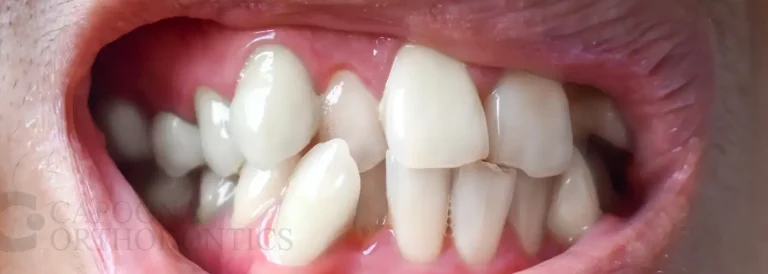
- Teeth overlapping or twisting
- Difficulty biting or chewing food
- Jaw shifting while closing mouth
- Early or late loss of baby teeth
- Gaps or crowding in visible teeth
These signs usually suggest an orthodontic evaluation is needed.
Why Timing Affects Treatment Results
Choosing the right stage for braces can make treatment easier and more efficient.
Benefits of correct timing
- Faster tooth movement in growing patients
- Lower risk of extractions
- More stable long-term results
- Reduced complexity of treatment
Delayed treatment may lead to more correction time or additional procedures later.
Modern Orthodontic Options Today
Orthodontic treatment is no longer limited to metal braces.
Common options available
- Traditional metal braces for complex cases
- Ceramic braces for a less visible look
- Clear aligners for removable treatment
- Lingual braces placed behind teeth
Digital scanning and 3D planning also help create more precise results with fewer adjustments.
Quick Comparison of Treatment Stages
| Stage | Best Age Range | Key Advantage |
|---|---|---|
| Early evaluation | 7+ years | Detects hidden issues early |
| Early treatment | 9–12 years | Guides jaw development |
| Teen treatment correction | 13–16 years | Full alignment and bite correction |
| Adult treatment correction | 18+ years | Cosmetic + functional correction |
Frequently Asked Questions
1. What is the most recommended age for braces?
Most orthodontic treatments begin between 9 and 14 years, depending on dental development.
2. Can braces be done before all permanent teeth come in?
Yes, in some cases early treatment is done to guide jaw growth and prevent future issues.
3. Are braces effective for adults?
Yes. Adults can achieve excellent alignment results with modern orthodontic options.
4. How long does braces treatment usually take?
Most cases take around 12 to 24 months, depending on complexity.
5. Do all children need braces at age 7?
No. Age 7 is mainly for evaluation, not automatic treatment.